













































There will be no amnesty, but the goal is to develop the parole system - Prime Minister
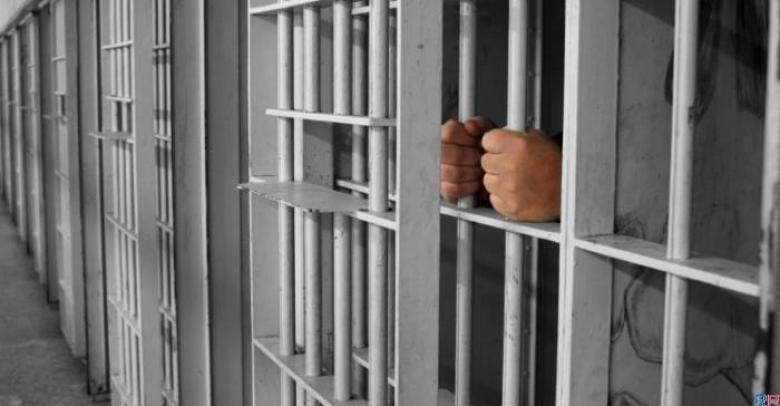
No amnesty is planned in Armenia, but the development of the conditional early release
(parole) system is intended to fill that role, Prime Minister Nikol Pashinyan stated during an
internal campaign event. According to him, the Ministry of Justice has been tasked with
developing this system to the point where it can fully replace amnesty. He added that
analyses have shown amnesty increases the rate of repeat offenses.
“Is an amnesty planned in the near future?” a resident of Vayk asked the Prime Minister.
“We have not planned one this year.”
The questioner’s relative is currently in a penitentiary institution after causing a fatal traffic
accident months ago. “They are young people, let them come out and start families.”
Pashinyan responded by recalling his own experience: years ago, he was imprisoned and
later released under an amnesty. However, according to him, that decision was political
rather than legal, made under international pressure. Today, the government is guided not
by amnesty policies, but by a strategy focused on resocialization and expanding the parole
system, which he considers a more human centered and fair approach.
“When it comes to amnesty, that act does not take into account the individual’s
characteristics. It is universal: convicted under a certain article, with a certain
amount of time left, everyone is released. Our previous analyses show that a
significant portion return to prison within the first three months after amnesty.”
According to the Probation Service of the Ministry of Justice, the number of beneficiaries
reached 20,132 in 2025, which is 6,920 more than in 2024. During the same period, the
rate of repeat offenses among probation beneficiaries decreased from 1.5% in 2024 to
1.4% in 2025. The latest data on parole releases was published late last year by Minister
of Justice Srbuhi Galyan.
“As of November 24 this year, 151 individuals have been released using this
mechanism. As for improvements, we are refining the scoring system used to
assess individuals, focusing on a more personalized approach.”
Convicts accumulate points by participating in resocialization programs. If they score more
than 28 points, the Penitentiary Service may prepare a positive report recommending
parole. However, the final decision is made by the prosecutor’s office and the courts.
According to the Penitentiary Service, in 2024, 765 reports were prepared, of which only
180 were positive, resulting in 138 parole releases.
Galyan noted that the ministry is currently working on improving both the content of reports
and the scoring system:
“We also have a systemic issue, internal to the system, in that the content of reports
needs improvement. That is why we are refining the parole institution. The
Penitentiary Service should evaluate behavior during imprisonment, while the
Probation Service should assess expected behavior after reintegration into society.
These two reports should not contradict each other, as sometimes happens now,
but rather complement one another. For this, it is necessary that those reports
answer different questions. We are now developing the framework of the questions
that those two reports should answer, and I can confidently say that they will be
more human-centered and objective.”
Responding to whether decision-making bodies are hesitant to release individuals
convicted of serious crimes or life sentences, Galyan said that may indeed be the case:
“Yes, courts may be concerned or may have a stereotypical approach. They may
consider the severity of the crime. To be honest, we have very few life prisoners
convicted of killing one or two people, we have extremely severe cases. Still, we
must determine whether a person has truly gone through the path of
resocialization.”
Rehabilitation and educational programs for inmates are implemented by the Ministry of
Justice’s Center for Legal Education and Rehabilitation Programs. These include training
in furniture-making, programming, sewing, personal development, pottery, decorative arts,
accounting, and more. In 2025, AMD 72 million was allocated from the state budget for
these programs.
According to Galyan, these programs have positively impacted not only parole outcomes
but also broader statistics, including transfers to less restrictive prison conditions:
“In percentage terms, we have more than a 50% increase in cases where individuals
are transferred to lighter conditions or lower-security zones. This shows that the
Penitentiary Service has adopted an individualized approach.And the sessions of
this placement commission are taking place more often.”
Pashinyan emphasized that the goal is to expand parole to such an extent that it fully
replaces amnesty:
“I promise you that we will very quickly increase the scale of conditional early
release so that those who deserve it will not have to wait for amnesty.”
In recent years, the number of resocialization programs in Armenian penitentiary
institutions has grown significantly. While around 2,800 participants were involved in
cultural and educational activities in 2019, that number reached 6,942 in 2024. In just the
first four months of 2025, 107 different events: including sports, religious, and cultural
activities, were held, with more than 2,200 participants.
Source: Radiolur
 Armenian government reiterates commitment to prompt signing of peace agreement with
 United States donates $1.4 million in equipment to strengthen Armenia’s border security