













































Hungary Prefers U.S. Armaments: Is Putin Becoming “Isolated”?
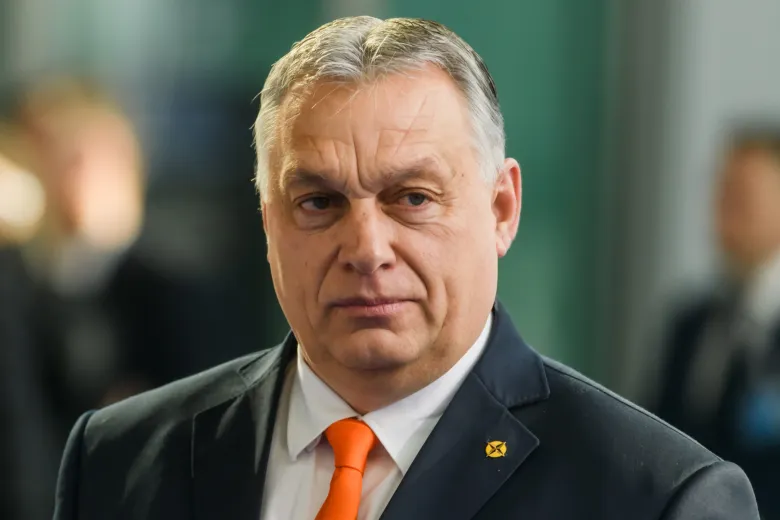
The Government of Hungary plans to purchase armaments from the United States, Defense Minister Kristóf Szalay-Bobrovniczky announced. He accompanied Prime Minister Orbán during the visit to Washington. Speaking with journalists aboard the aircraft on the return to Budapest, the defense minister referred to understandings reached on arms procurement. He emphasized that the HIMARS multiple-launch rocket system “has been included on the list of acquisitions drawn up on the basis of a ten year plan for the development of the armed forces.” He reasoned that it would be "too expensive, as it would expand Hungary's strategic capability. HIMARS is a technology that could be considered the most likely solution."The decision of the Hungarian Government should be viewed not only in the security domain, but also in terms of geopolitical orientation. It is noteworthy that Budapest is opting for American armaments and technologies at a time when, as has become known, Russia has begun production of “Oreshnik” missiles and has conducted tests of the “Burevestnik” and “Poseidon” systems.
Hungary is a unique member of the European Union and NATO that unequivocally supports Russia on the Ukraine issue, creating obstacles with respect to Ukraine’s EU membership, assistance to Kyiv, and the imposition of sanctions on Moscow. Yet it appears that, for Budapest, the guarantee of expanding strategic capabilities is the American HIMARS, because it is a high technology. For NATO-member Hungary, acquiring armaments from Russia would, of course, be problematic; however, if Russian armaments were of higher quality and technologically superior, Viktor Orbán would likely not have given preference to Washington. That decision will undoubtedly have political consequences. During the first phase of the war in Ukraine, experts observed tendencies toward the formation of a “Putin Club” in Europe; the process appears to be frozen. Even Serbian President Vučić has declared readiness to supply artillery shells to Ukraine.
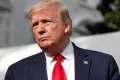
The Russian press conveys the impression that, following a Trump–Orbán meeting, the President of the United States “did not rule out the possibility of a meeting with Putin.” Trump reportedly stated that he would like to meet Putin specifically in Budapest. Deutsche Welle’s Russian service has relayed the impression that Putin is “preparing to send Foreign Minister Lavrov on vacation.” According to the majority of experts, the Trump–Putin meeting did not take place “because of Lavrov,” who, during a telephone conversation with Secretary of State Rubio, adopted “a posture unacceptable to the American side.”
To what extent has Viktor Orbán managed to “soften Trump’s anger”? Do the understandings on arms procurement meet Washington’s expectations of Budapest, or has Hungary undertaken to limit cooperation with Russia in other spheres as well? It should perhaps also be considered that Hungary is among Azerbaijan’s close allies; a deepening of its relations with the United States may have a positive impact on the situation in the South Caucasus.
 Cross-stone dedicated to Armenian Genocide victims installed in Saint-Chamond, France
 Armenian welfare ministry seeks to extend pension cashback program
 Armenian government reiterates commitment to prompt signing of peace agreement with
 United States donates $1.4 million in equipment to strengthen Armenia’s border security