



















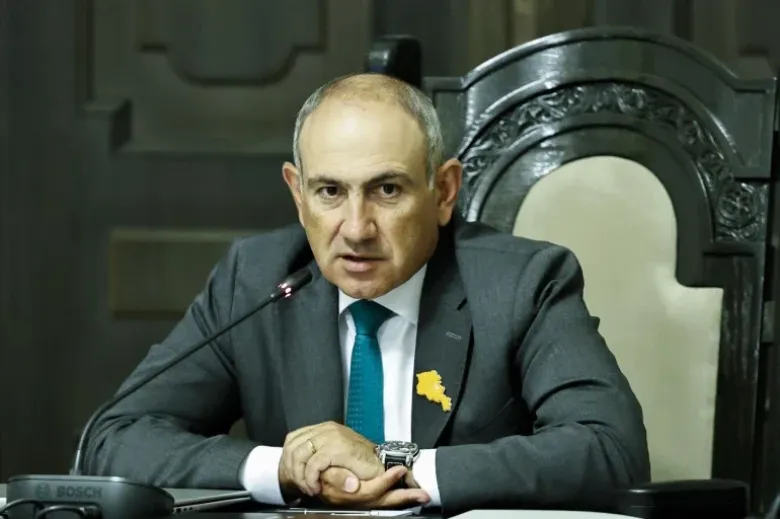
“According to [European Commission] President von der Leyen’s statements, this decision will apply to about 80 percent of potential exports from Armenia in general, 99 percent of agricultural products, 99 percent of agricultural products—fruits and vegetables, and about 90 percent of alcoholic and non-alcoholic beverages. Of course, these lists will be adjusted,” the Armenian premier noted.
He recorded that this decision will take some time to fully enter into force, because during this time the EU member states must make decisions, and the European Parliament must pass a corresponding resolution.
“But I want to remind that we still have a decision today, by which we [i.e. the Armenian government] provide export support in the matter of customs payments. I mean, in real life, today also we have created this opportunity on our part. Of course, this decision expands it further.
This decision is a necessary, but an insufficient condition for us to be able to take advantage of the potential opportunities that are opening up, because our private sector and business must learn how to use these mechanisms. We must record that this is a completely new direction for a significant, if not the majority, of our exporters.
Naturally, the procedures of the European Union will not change for us [i.e. Armenia]. It is a free trade regime, but it is clear that there are certain rules in the circulation of documents and other issues, and we, of course, also agreed with our EU partners that we will implement joint programs to assist our partners in the private sector, so that they also prepare appropriate personnel who will be aware, starting from knowledge of the language to knowledge of the legislation.
I want us to appreciate this event, because this is a very significant and turning point, because the EU market of 450 million is a high-price segment market, but it is also a market of high standards. We cannot take apricots in a bucket to the EU. This is normal, because we want to have access to the global market. After all, it is a good opportunity to implement the food standards that we have on paper in real life, too.
I mean, the EU has made the decisions, and during this time the EU institutions will work. But we also need to work with the private sector [of Armenia], informing them about how the mechanisms work.
At the political level, we can state that the export problem has been solved. Now it remains for us to be able to solve it at the practical level. This is already our work, this is not the work of foreign institutions. We must work very actively,” added the prime minister of Armenia.
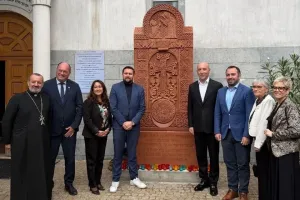 Cross-stone dedicated to Armenian Genocide victims installed in Saint-Chamond, France
 Armenian welfare ministry seeks to extend pension cashback program
 Armenian government reiterates commitment to prompt signing of peace agreement with
 United States donates $1.4 million in equipment to strengthen Armenia’s border security